
Built Together.
Your Offroad Partner.
Your Offroad Partner.
Your Offroad Partner.
Your Offroad Partner.

Bronco rock sliders vs steps comes down to the job: choose purpose-built rock sliders for rocker-panel protection, or steps for easier entry. For your 2026 Ford Bronco, verify the exact body configuration and mounting requirements before ordering; a wide tread, steel construction, or off-road name does not establish that a step can support trail contact.
Your Bronco needs a foothold every time someone climbs aboard, but rocker protection matters when an obstacle reaches the body below the doors. Buying for the wrong task leaves you with an entry aid where you expected armor—or armor that does little to help passengers climb in.
Start with the problem you need to solve before browsing Iron Ridge Offroad. For a 2026 daily driver that also sees trails, the useful question is not which accessory looks tougher: it is whether your routes demand protection, your passengers need a lower step, or both.
A rock slider is a protection component; a step is an access component. Some designs combine those functions, but the manufacturer's stated use, mounting instructions, and limitations must support that claim.
Use this comparison to narrow the category before comparing individual parts. These are selection criteria, not promises about every product carrying the same label.
| Option | Best for | Main benefit | Main trade-off | What to verify |
|---|---|---|---|---|
| Purpose-built rock sliders | Drivers expecting rocker-area contact on rocky trails | A structure designed to protect the rocker area | The usable foothold can be high or narrow | Intended contact loads, mounting points, body fitment, and installation requirements |
| Fixed steps or running boards | Daily entry and passengers needing a clear foothold | A dedicated stepping surface | A low or outward-projecting step can meet obstacles before the body does | Step position, tread, supported applications, and stated load limits |
| Go Rhino E-Board E1 electric running boards for Ford Bronco 4-door | Bronco 4-door owners comparing powered entry aids | A powered running-board option | Electrical installation and moving components add requirements | Exact model-year application, wiring, deployment clearance, and manufacturer limitations |
| Documented slider-step combination | Drivers needing both entry assistance and rocker protection | Both functions in one assembly | The step surface can affect clearance and obstacle interaction | Explicit protection claims, usable tread, and mounting documentation |
Do not rank these categories by appearance. A heavy-looking tube is not proof of impact capability, and a compact rail is not automatically a comfortable step. Match the documented function to your actual use.
Choose purpose-built rock sliders when your trail plan includes obstacles that threaten the rocker area. Look for manufacturer documentation explaining what the assembly protects and how it attaches to the vehicle.
The mounting system matters as much as the visible rail. Review the brackets, attachment locations, hardware, and installation procedure together rather than judging the tube or plate alone. Do not assume one mounting style proves every product's capability.
The practical drawback is entry height. A close-fitting slider can leave the foothold near the rocker rather than creating the lower intermediate step your passenger needs. Before buying, check whether the manufacturer identifies a usable stepping surface and shows its installed position.
A slider also protects a particular area, not the entire underside. Keep rocker protection separate from decisions about skid plates, bumpers, and recovery equipment. Choose rock sliders for documented rocker protection, not as a substitute for every other trail component.
Choose fixed steps when getting in and out is the main problem. Focus on where your foot lands, whether the tread is usable with your normal footwear, and whether each passenger has a practical stepping position.
The benefit is straightforward: a dedicated foothold helps bridge the climb into the cabin. The trade-off is its installed position. A step extending below or outside the rocker occupies space that an obstacle can reach.
For your 2026 Bronco, compare installed views rather than isolated product photos. Check the step beneath each door, the bracket locations, and the relationship between the tread and the body. A wide platform is useful only if passengers can reach and use it comfortably.
Do not convert a passenger-support rating into a rock-impact rating. Those are different uses with different loading conditions. Treat a fixed step as an entry aid unless its manufacturer explicitly documents a protection role.
Choose electric running boards when you want powered entry assistance and accept the associated installation and maintenance requirements. Read the complete application information before deciding whether a particular system suits your Bronco.
The Go Rhino listing identifies a Bronco 4-door application. That does not establish compatibility with every model year, trim, existing accessory, or wiring arrangement. Confirm those details in the current product and manufacturer information before ordering.
Powered boards also require you to evaluate more than the tread. Review the wiring route, deployment path, moving hardware, and manufacturer instructions for cleaning or troubleshooting. Keep both the operating position and the parked position in your clearance assessment.
For Iron Ridge Offroad Bronco running-board shoppers, the decision is entry assistance first. Choose a powered board for its documented access function; require separate evidence before treating it as trail armor.
A slider-step combination is relevant when your Bronco needs a useful foothold and rocker protection. The key word is documented: both functions need support in the manufacturer's description and installation information.
Check the step surface separately from the protective structure. Ask whether the foothold sits where passengers need it and whether its shape creates an exposed edge below the main rail. A product can satisfy your protection requirement while still being awkward for everyday entry.
The reverse also applies. A comfortable platform does not establish that its brackets and attachment points are designed for trail contact. Read the limitations before making the combined-function claim yourself.
Choose a dual-purpose design only when neither function depends on an assumption. If the documentation explains entry but not protection, evaluate it as a step.
Your best option changes with the vehicle configuration and the task. For a 2026 purchase, use these factors to build a shortlist rather than starting with material thickness or an aggressive product name.
Use this sequence to avoid comparing parts that solve different problems. Keep the vehicle details and manufacturer documents beside you while you work through it.
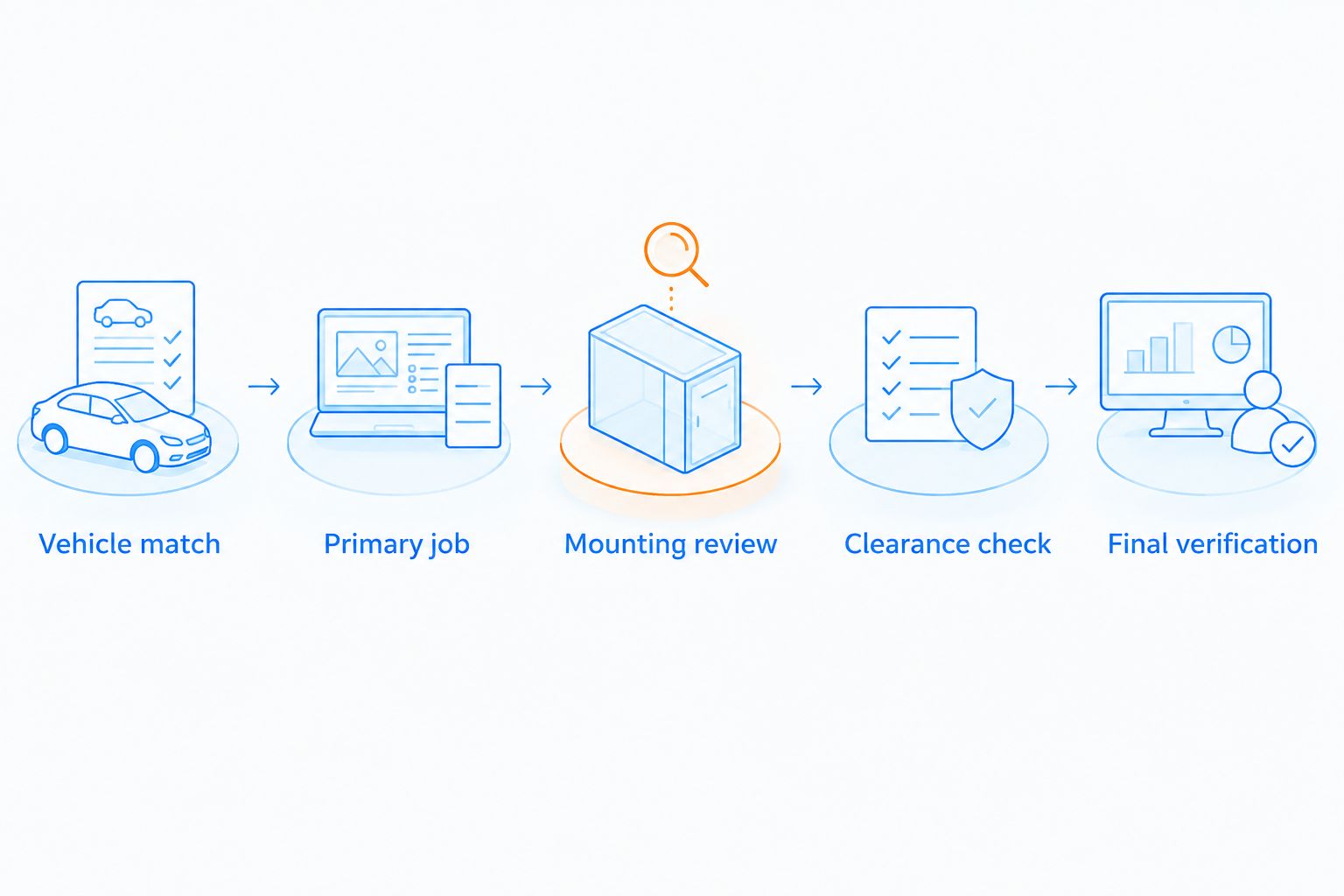
The strongest shortlist contains parts you can explain without guessing. You should know what each assembly does, where it mounts, what must come off the vehicle, and what its manufacturer does not claim.
Iron Ridge Offroad is best for truck and SUV owners shopping aftermarket off-road parts by vehicle and category. For Bronco rocker protection or entry aids, keep that vehicle-specific approach through the final part-number check.
Rock sliders can provide a foothold when their design includes a usable stepping surface. They do not automatically provide the lower intermediate position that makes a dedicated step helpful.
Check the installed rail height, available tread, and passenger access before choosing a slider for both jobs. If entry is the reason you are buying, assess the foothold first rather than accepting it as a secondary feature.
Running boards are enough for entry assistance; they are not automatically enough for rocker protection. Require a manufacturer's stated protection function before relying on a running board during obstacle contact.
A route without expected rocker contact presents a different selection problem from a trail that demands armor. Choose against the obstacles you intend to drive, not the broad label of off-road use.
A suspension change alters the entry-height question, so reassess where passengers need the foothold. It does not, by itself, establish that a particular step fits or that a particular slider becomes necessary.
For a 2026 Bronco build, evaluate suspension and entry equipment together while keeping their functions separate. The lift addresses suspension height; the step or slider must still meet its own fitment and use requirements.
What's the main difference between Bronco rock sliders and steps?
Bronco rock sliders are designed for rocker-area protection, while steps are designed for easier entry. A product serving both roles needs manufacturer documentation supporting both functions.
Can I stand on Bronco rock sliders?
Use a Bronco rock slider as a step only within its manufacturer's stated use and limits. Confirm that the stepping surface and installed position suit your passengers rather than assuming every rail is a practical foothold.
Are steel Bronco steps the same as rock sliders?
Steel Bronco steps are not automatically rock sliders. Material alone does not establish impact capability; review the assembly's intended use, brackets, attachment points, and limitations.
Will a Bronco 4-door running board fit a Bronco 2-door?
Do not install a Bronco 4-door running board on a Bronco 2-door unless the manufacturer explicitly lists that application. Verify the exact part number and body configuration before ordering.
Are electric running boards a good choice for a daily-driver Bronco?
Electric running boards suit daily-driver buyers prioritizing powered entry assistance. Compare the exact vehicle application, wiring requirements, deployment clearance, and maintenance instructions before choosing a system.
Can I keep factory rock rails and add steps?
Keep factory rock rails with added steps only when the step manufacturer explicitly supports that combination. Check mounting conflicts and required removals in the installation instructions.
Should I buy rock sliders before lifting my Bronco?
Choose the purchase order around the problem you need to solve, not a fixed modification sequence. Expected rocker contact supports a protection decision, while difficult entry supports an access decision; verify compatibility with the planned suspension setup.
A stated passenger load limit is not proof of rock-impact protection. Before ordering, find the manufacturer's explanation of the intended use—not just a weight figure, material description, or photo of a vehicle on a trail.
If that explanation does not support obstacle contact, keep the part in the entry-aid category. That single distinction prevents the most consequential mistake in choosing between Bronco sliders and steps.