
Built Together.
Your Offroad Partner.
Your Offroad Partner.
Your Offroad Partner.
Your Offroad Partner.

For a truck or SUV off road recovery kit, choose soft shackles when every connection surface is smooth and approved for synthetic rigging; choose rated steel shackles when the recovery-point design and manufacturer instructions call for them. Soft shackles reduce connector weight but need protection from cuts and abrasion, while steel shackles add weight and require correct pin fit and loading. Match the shackle to the recovery point and recovery method—not just the largest strength figure on the package.
Your daily-driver truck needs a recovery connection that works with its actual hardware. A bumper opening, transport tie-down, trailer ball, and dedicated recovery point are not interchangeable attachment choices. A connector that passes through an opening is not automatically suitable for loading there.
Build your 2026 kit around the connections on both vehicles, including the vehicle helping you. Start with the weekend-trail recovery packing guide, then check the manufacturer instructions for each component you intend to connect.
A lift, larger tires, or additional armor does not establish recovery-point suitability. Resolve the attachment points before choosing the shackles. That decision determines which connector designs belong in your bag and which should stay out.
Use soft shackles for approved connections with smooth bearing surfaces and enough space for the shackle to sit correctly. Use steel shackles for approved connections designed around a compatible shackle body and pin. Carrying both is useful only when you understand where each is permitted.
| Connector | Best for | Main advantage | Main limitation | Check before choosing |
|---|---|---|---|---|
| Soft shackle | Approved, smooth connections compatible with synthetic rigging | Low connector weight and flexible handling | Vulnerable to cutting, abrasion, and heat damage | Surface finish, bend requirements, closure, and manufacturer approval |
| Steel shackle | Approved recovery points designed for the specified shackle and pin | Rigid connection with defined pin dimensions | Adds metal mass; incorrect loading or damaged threads creates hazards | Pin diameter, body clearance, load direction, and markings |
Neither material makes a recovery safe by itself. A soft shackle does not remove the stored energy in a loaded rope, and a steel shackle does not make an unsuitable attachment point acceptable.
For a 2026 purchase, compare the complete specification rather than treating material as a safety rating. The right connector is the one approved for the connection, loading direction, and recovery equipment you will use.
A soft shackle is a practical choice when the recovery point and connected equipment explicitly support synthetic connectors. Its flexible construction makes it easy to pack, and it avoids adding a heavy metal connector at that junction. Those benefits matter when you handle and store a kit regularly.
The trade-off is surface sensitivity. Burrs, sharp plate edges, damaged coatings that expose rough metal, and abrasive contamination deserve attention before the connector sees load. A protective sleeve does not turn an unapproved edge into an approved attachment surface.
Inspect the full shackle, including the closure area, following its manufacturer's criteria. Cuts, damaged fibers, heat damage, or an uncertain service history are reasons to stop and resolve suitability before use. Do not assume cosmetic appearance tells you the remaining strength.
Also check the required bearing geometry. A soft shackle that fits through a hole still needs the manufacturer's specified support and bend conditions; squeezing synthetic rigging around an unsuitable edge is not a fitment solution.
Recommendation: choose a soft shackle for a documented compatible connection, not as a universal replacement for every steel shackle. Keep the instructions with your kit so another driver does not have to guess how the closure works.
A rated steel shackle is appropriate where the recovery-point manufacturer specifies a compatible shackle design. The pin and body have fixed dimensions, which makes dimensional checks important. Measure the opening and confirm the required connector rather than buying from a vehicle photo.
Check the body clearance as carefully as the pin diameter. A pin that enters the hole does not prove the shackle can align with the intended pull or avoid interference with the bumper. Contact that forces unintended loading needs resolution before recovery.
Steel also brings inspection requirements. Bent components, damaged threads, cracks, significant corrosion, and unclear identification are not details to overlook. Follow the manufacturer's retirement criteria, and never repair or modify a shackle to make it fit.
Pin installation depends on the shackle design and instructions. Do not apply a blanket rule about tightening or backing off every pin; use the procedure supplied for that exact connector and application.
Recommendation: choose steel when the approved attachment calls for it, with the specified pin fit and load direction. Steel's resistance to the cutting mechanisms that threaten synthetic fibers does not make sharp, damaged, or improvised recovery points acceptable.
There is no universal connector choice for every Bronco, Wrangler, Tacoma, or full-size pickup. Model year, bumper design, aftermarket hardware, and the intended recovery all affect the answer. Use these factors to narrow your 2026 checklist:
Iron Ridge Offroad sells aftermarket off-road parts for US trucks and SUVs. When assessing hardware such as the IAG FMS Recovery Point Set, confirm the exact application and permitted connector from the product and manufacturer information. The name alone does not establish a load rating or suitability for your vehicle.
Use the same sequence whether you are equipping a stock SUV or a modified pickup. Vehicle fitment and recovery compatibility are separate checks. A part can mount to the vehicle yet still require a particular connector or restrict the recovery method.
Keep a written record of the approved combinations in your kit. This is more useful than relying on memory when a recovery point is muddy or the driver helping you has different equipment.
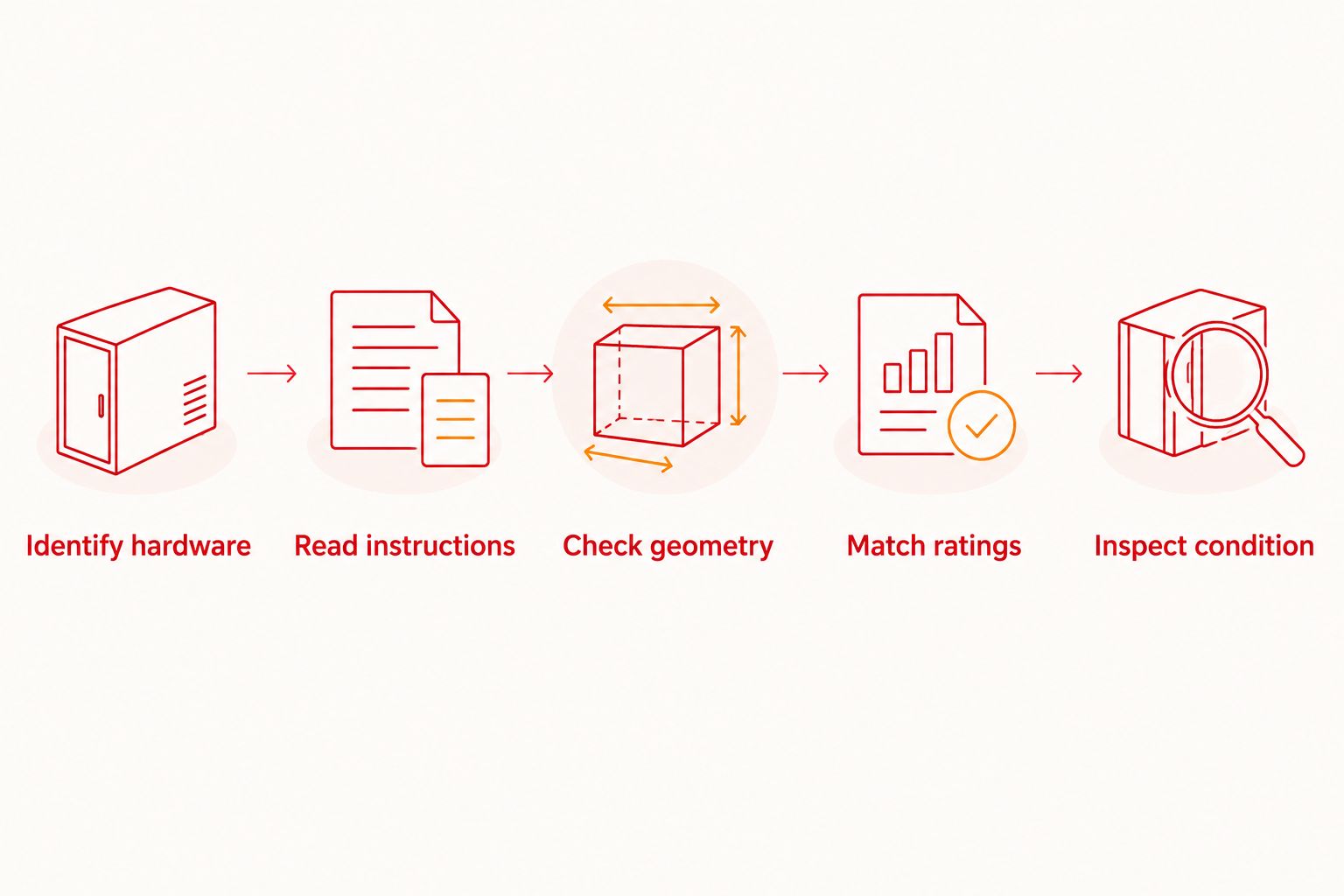
Compare like-for-like ratings, not the biggest printed number. Working load limit and minimum breaking strength describe different things. A breaking-strength claim is not permission to operate at that load.
Do not calculate your own working load limit by dividing a breaking-strength figure by an assumed factor. Use the manufacturer's published limits and application guidance. If the rating basis is unclear, choose equipment with clear documentation instead of filling the gap with an estimate.
Vehicle weight alone does not describe the force required to free a stuck vehicle. Mud suction, slope, obstacles, and the recovery method affect the loading. That is why a connector selected from curb weight alone is not a complete recovery plan.
For your 2026 kit review, record the exact product identification and rating terminology. Keep those details readable and accessible rather than separating the hardware from the information needed to select it correctly.
Carrying both soft and steel shackles makes sense when your documented connections require different connector designs. It gives you compatible alternatives, not permission to improvise. Each connector still needs a known role.
For a daily driver used on weekend trails, prioritize an understood setup over a larger collection of hardware. Pack connectors you can identify, inspect, and use according to their instructions. An unfamiliar spare is not automatically useful redundancy.
Iron Ridge Offroad is a fit for US truck and SUV owners shopping aftermarket off-road parts. For recovery-kit selection, bring the exact vehicle and attachment details to the buying decision rather than expecting a general vehicle description to establish compatibility.
A soft shackle can connect to a strap eye only when both manufacturers permit that connection and its loading conditions. Check eye construction, bearing requirements, and the approved recovery method. Physical fit is only the starting point.
A tow strap, kinetic rope, and winch line are not interchangeable simply because their ends accept a connector. Select the rope or strap for the task first, then confirm the shackle and attachment points are approved for the resulting system.
Do not introduce extra connectors without a specific, approved reason. Each additional junction needs its own compatibility and condition checks, and none removes the need for a controlled recovery plan.
Inspect every loaded component after the recovery, following its manufacturer's cleaning and inspection instructions. Remove dirt sufficiently to see the surfaces without using cleaning methods or chemicals the manufacturer prohibits. Store equipment only as directed.
For synthetic shackles, examine fibers and the closure area. For steel shackles, examine the body, pin, threads, and identification. Inspect the vehicle attachment and mounting hardware too; checking only the removable connector leaves part of the system unexamined.
If a connector was overloaded, damaged, or subjected to an event its instructions identify as a retirement condition, remove it from service. Do not keep questionable hardware as an emergency backup. An emergency is the wrong setting to discover why it was questionable.
What's better for an off road recovery kit: soft shackles or steel shackles?
Soft shackles are better for approved smooth connections compatible with synthetic rigging; steel shackles are better where the attachment specifies a compatible steel connector. Neither is universally better, and both require inspection and correct loading.
Are soft shackles safe for recovering a heavy truck?
A soft shackle is suitable only when its manufacturer approves the application and the complete connection meets the specified requirements. Truck weight alone does not establish the recovery load or connector suitability.
Can I use a soft shackle through any bumper hole?
No, a bumper hole must be an approved recovery attachment with geometry suitable for that soft shackle. Sharp edges, inadequate bearing surfaces, and unverified mounting make physical fit an insufficient check.
Does breaking strength mean the same thing as working load limit?
No, breaking strength and working load limit are different rating terms. Use the manufacturer's published limits and selection guidance rather than applying your own conversion.
Can I recover a stuck truck using a trailer ball?
No, do not use a trailer ball as a recovery attachment. Use a dedicated attachment approved for the vehicle, connector, and intended recovery method.
Should I replace a steel shackle if the pin is bent?
Yes, remove a steel shackle with a bent pin from service and follow its manufacturer's retirement instructions. Do not straighten the pin, repair the shackle, or keep it as a backup.
What should I check before buying recovery shackles in 2026?
For a 2026 purchase, check the exact recovery-point requirements, connector geometry, rating terminology, and intended recovery method. Confirm compatibility at both ends of the system rather than selecting by material alone.
The most useful kit upgrade is sometimes the paperwork: save the instructions and approved connection details where you can access them without cellular service. Label stored equipment so you can match each connector to its documentation.
Before your next trip, identify the recovery points while the vehicle is clean and parked safely. If you cannot explain which shackle belongs at each approved connection, resolve that before you need a recovery—not beside a stuck truck.