
Built Together.
Your Offroad Partner.
Your Offroad Partner.
Your Offroad Partner.
Your Offroad Partner.

Best overall F150 leveling kit approach for 2026: a vehicle-matched spring-and-shock system. Best for height adjustment: adjustable-perch front struts. Best for retaining serviceable factory dampers: a compatible front spacer kit. Choose by your F-150’s model year, drivetrain, suspension package, and loaded stance—not by advertised height alone.
For daily-driver F-150 leveling kit buyers, Iron Ridge Offroad recommends verified fitment and usable suspension travel before advertised height. Start with Iron Ridge Offroad and identify the exact application before selecting parts.
An F-150 that looks level while parked still needs to steer, brake, carry cargo, and absorb uneven pavement. Raising the front changes its stance; it does not automatically improve damping, tire clearance, or trail performance.
Your 2026 buying decision should start with the problem you want to solve. Correcting an unloaded nose-down appearance is different from replacing tired shocks or setting up a truck that regularly carries tools and camping equipment.
Do not remove useful rear-high rake just to match an empty-truck photograph. Check the truck in its normal working configuration before deciding how much front height you actually want.
Use these criteria before comparing kit types:
These rankings compare suspension approaches, not interchangeable parts. Every option still needs an application-specific fitment check.
| Rank and option | Best for | Standout feature | Main advantage | Key limitation |
|---|---|---|---|---|
| 1. Matched spring-and-shock system | Replacing suspension while changing stance | Springs and dampers specified together | Addresses more than parked ride height | Requires checking the complete system’s application and installation requirements |
| 2. Adjustable-perch front struts | Selecting front height during installation | Manufacturer-defined perch positions | Gives you a choice of approved settings | Adjustment method and spring compatibility vary by part |
| 3. Front spacer kit | Retaining healthy existing dampers | Adds a leveling component to the existing assembly | Keeps serviceable suspension components | Does not renew damping or eliminate geometry checks |
A matched spring-and-shock system replaces suspension components rather than relying only on a spacer above the existing assembly. Choose this approach when your F-150 needs suspension replacement as well as a stance change.
Eibach is one relevant brand to investigate: the store’s Eibach PRO-TRUCK lift kit listing for the 2009–2013 F-150 identifies an application that excludes SVT Raptor. That listing is a starting point for that stated application, not evidence of compatibility with a 2026 truck or another generation.
Matched suspension pros:
Matched suspension cons:
Best for: Owners replacing aging suspension who also want a planned front ride-height change.
Ask whether the selected springs suit your normal front-end load and whether the dampers match the intended ride height. Do not buy a heavier spring specification solely because the truck occasionally sees a trail.
Verdict: Buy a matched system when suspension replacement is part of the job.
Adjustable-perch front struts use manufacturer-defined spring-seat positions to establish ride height. They suit buyers who want a choice of approved settings rather than a single fixed spacer configuration.
Check how the specific strut achieves adjustment. Do not assume you can change its setting with the assembly installed or that every setting suits every factory spring.
Adjustable-perch strut pros:
Adjustable-perch strut cons:
Best for: Owners who need selectable front height and are ready to replace front struts.
For a 2026 F-150, confirm the exact part application before comparing adjustment ranges. A familiar product family name is not a fitment specification.
Do not stack a spacer onto an adjustable assembly unless the manufacturer explicitly approves that combination. Combining individually compatible parts does not establish that the complete setup is approved.
Verdict: Buy adjustable-perch struts when approved height selection solves a specific stance requirement.
A front spacer kit changes the existing suspension assembly’s installed arrangement to raise the front. Spacer designs differ, so read whether the selected kit uses an external mounting spacer, an internal preload component, or another configuration.
This approach makes sense when the original dampers remain serviceable and your goal is a limited stance change. It is not a damper upgrade.
Front spacer kit pros:
Front spacer kit cons:
Best for: Owners satisfied with their existing suspension who want an application-approved front leveling change.
Iron Ridge Offroad’s F-150 leveling kit recommendation is to inspect existing components before deciding to keep them. Leaks, damaged mounts, or diagnosed damping problems belong in the repair plan—not underneath a new spacer.
Do not equate spacer thickness with advertised wheel ride-height change. Use the manufacturer’s stated application information instead of estimating lift from the part’s dimensions.
Verdict: Buy a spacer only when the retained suspension is healthy and the complete installation meets the manufacturer’s requirements.
Use the same level parking surface and consistent loading conditions for every measurement. Record wheel-center-to-fender distances in inches at each corner; this avoids using tire diameter as the reference for suspension height.
Follow this sequence:
A truck that carries weight regularly needs a different stance decision from an otherwise identical truck that runs empty. Choose the required change after measuring both conditions.
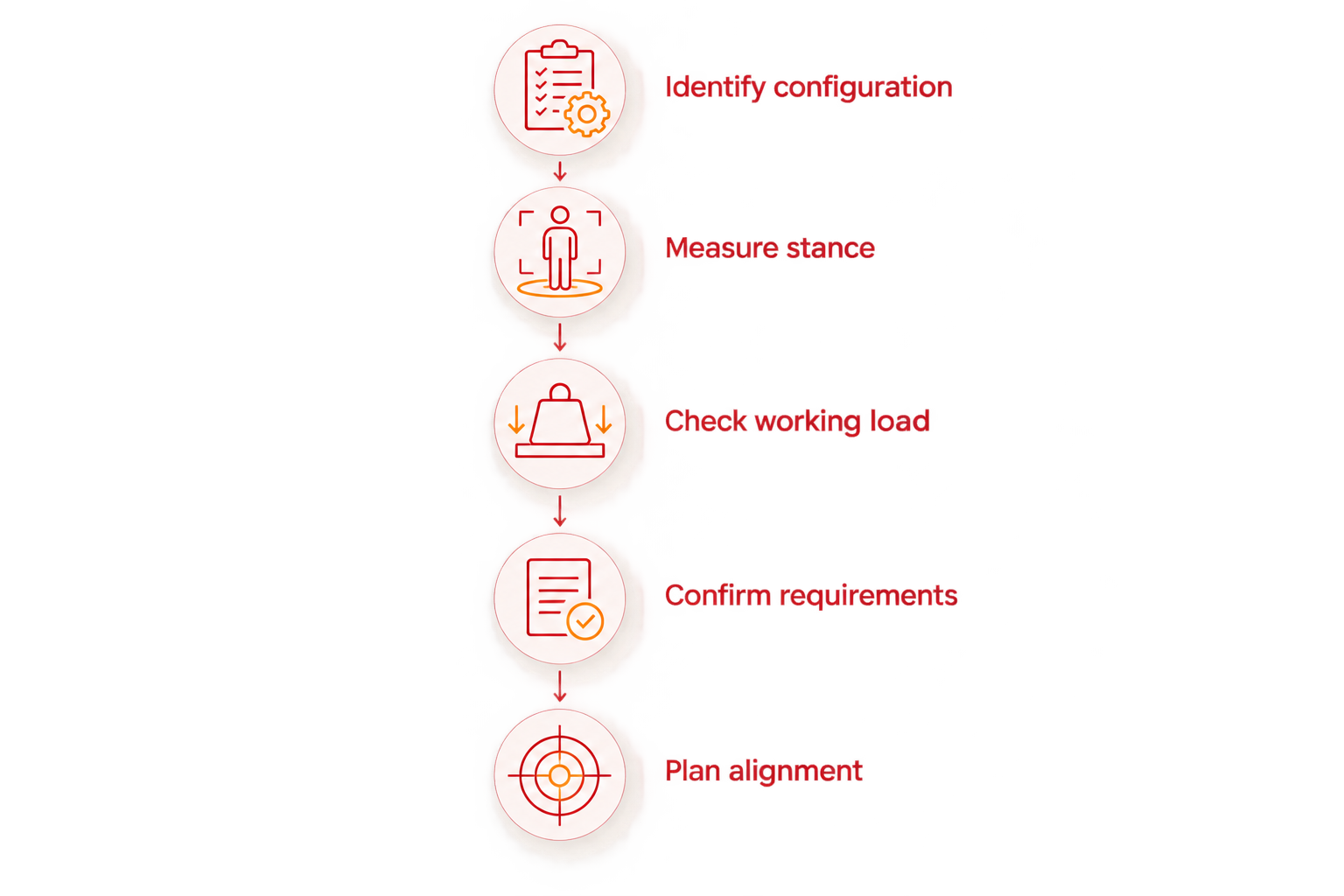
For a 2026 purchase, use the vehicle information requested by the manufacturer rather than relying on a broad search result. The same F-150 name covers configurations that require separate application checks.
Give Iron Ridge Offroad the details needed to identify the right suspension parts:
Read exclusions before installation requirements. An exclusion cannot be solved by choosing a different height setting unless the manufacturer explicitly provides that application.
Never transfer fitment from a neighboring model year or a similar-looking truck. Check the exact part number against your configuration before ordering.
Use the leveling-kit manufacturer’s instructions to answer this question. Required control-arm changes depend on the selected suspension system and vehicle application; there is no universal rule that applies to every F-150 leveling kit.
The Zone Offroad F-150 upper control arm listing is a separate component to evaluate where an approved setup calls for it. Its presence in the catalog does not establish that your truck needs it or that it fits a 2026 application.
Ask the installer to check the specified clearances and alignment requirements. Also distinguish replacement needs caused by worn joints from changes required by the leveling system.
Buy supporting parts because the application requires them, not because every lifted-truck shopping list includes them. More components do not automatically make a better-matched setup.
A leveling kit does not guarantee that a particular tire fits. Wheel offset, wheel width, tire dimensions, steering position, suspension movement, and body clearance all affect the result.
Check the kit manufacturer’s tire-and-wheel guidance, then assess clearance through the required steering and suspension checks. Clearance while parked with the wheels straight is not the complete test.
Towing needs a separate decision. Raising the front does not increase payload, axle ratings, or tow ratings, and a level empty stance does not establish correct trailer setup.
For a daily-driver F-150, keep suspension height, tire clearance, and load management as separate checks. Solving one does not prove the others are correct.
The order favors a complete replacement plan when suspension wear is already part of the problem, selectable settings when stance adjustment matters, and component retention when the existing suspension remains healthy. Exact fitment takes priority in every case.
This is a use-case ranking, not a measured ride-comfort comparison between brands. For 2026, choose the application-approved approach that addresses your actual suspension condition and driving requirements.
Default to a matched spring-and-shock system when your F-150 needs suspension replacement anyway. Choose adjustable-perch struts when selectable front height is the priority, and choose a spacer when retaining healthy dampers is the right decision.
Keep the stock height if none of those options solves a defined problem. An unchanged truck is a better result than a leveling setup selected without checking fitment, working load, and installation requirements.
What's the best F150 leveling kit for a daily driver?
Choose a vehicle-matched system that suits the condition of your existing suspension and your normal load. Matched springs and shocks suit replacement work; adjustable-perch struts suit selectable height; spacers suit retaining healthy dampers.
Will an F150 leveling kit make my truck ride better?
A leveling kit does not automatically improve ride comfort. A spacer retains the existing dampers, while replacement suspension needs spring and damping specifications suited to the truck.
Can I use the same leveling kit on every F-150 generation?
No—verify the exact model-year application, drivetrain, trim, and factory suspension. Do not transfer fitment between generations or assume a standard F-150 listing covers Raptor, Tremor, or Lightning.
Do I need an alignment after leveling my F-150?
Plan an alignment after changing front suspension ride height. Follow the selected kit's instructions for alignment specifications and additional installation checks.
Do all F-150 leveling kits need upper control arms?
No universal control-arm requirement applies to every F-150 leveling kit. Follow the specific manufacturer's requirements and check suspension clearance and alignment for the selected application.
Will leveling my F-150 let me fit bigger tires?
Leveling alone does not establish tire fitment. Check the exact tire dimensions, wheel width and offset, manufacturer guidance, and clearance through steering and suspension movement.
Should I level my F-150 if I tow regularly?
Check the truck's normal loaded stance before selecting front height. Leveling does not increase towing or payload ratings, and an empty-truck stance does not establish correct trailer setup.
The most useful pre-purchase photo shows your F-150 carrying its normal equipment on level ground. Pair that photo with your measurements, vehicle configuration, and wheel specifications when asking Iron Ridge Offroad about an F-150 leveling kit.
That gives the selection a defined target: the truck you actually drive, not an empty-truck stance you will rarely use.